Crime Is Down—So Why Does Crime Prevention Still Matter?
By Vivian Havlin
For those of us who work in crime prevention, there is some encouraging news to share.
The FBI recently released its 2025 crime statistics, and the numbers are moving in the right direction. Violent crime has decreased significantly across the country. Murder and nonnegligent manslaughter were down 18.1%, robbery decreased 18.5%, rape decreased 7.6%, and aggravated assault decreased 7.2%. Property crime also declined by an estimated 12.4%.
Those are numbers worth celebrating. But they also raise a question I think is important for all of us to consider:
If crime is going down, why do we still need crime prevention?
My answer is simple:
because prevention is part of what helps keep crime down.
After more than two decades working in crime prevention, one thing I have learned is that we cannot wait until something happens to decide that safety matters. Crime prevention has never been about frightening people or making us suspicious of everyone around us. It is about awareness, education, communication, and looking out for one another.
Sometimes the best crime prevention tool isn't complicated at all.
It is knowing your neighbors.
Think about your own neighborhood for a moment. Do you know the people who live next door? Would you recognize their car? Would you notice if something seemed out of place at their home while they were away? More importantly, would they notice something unusual around yours?
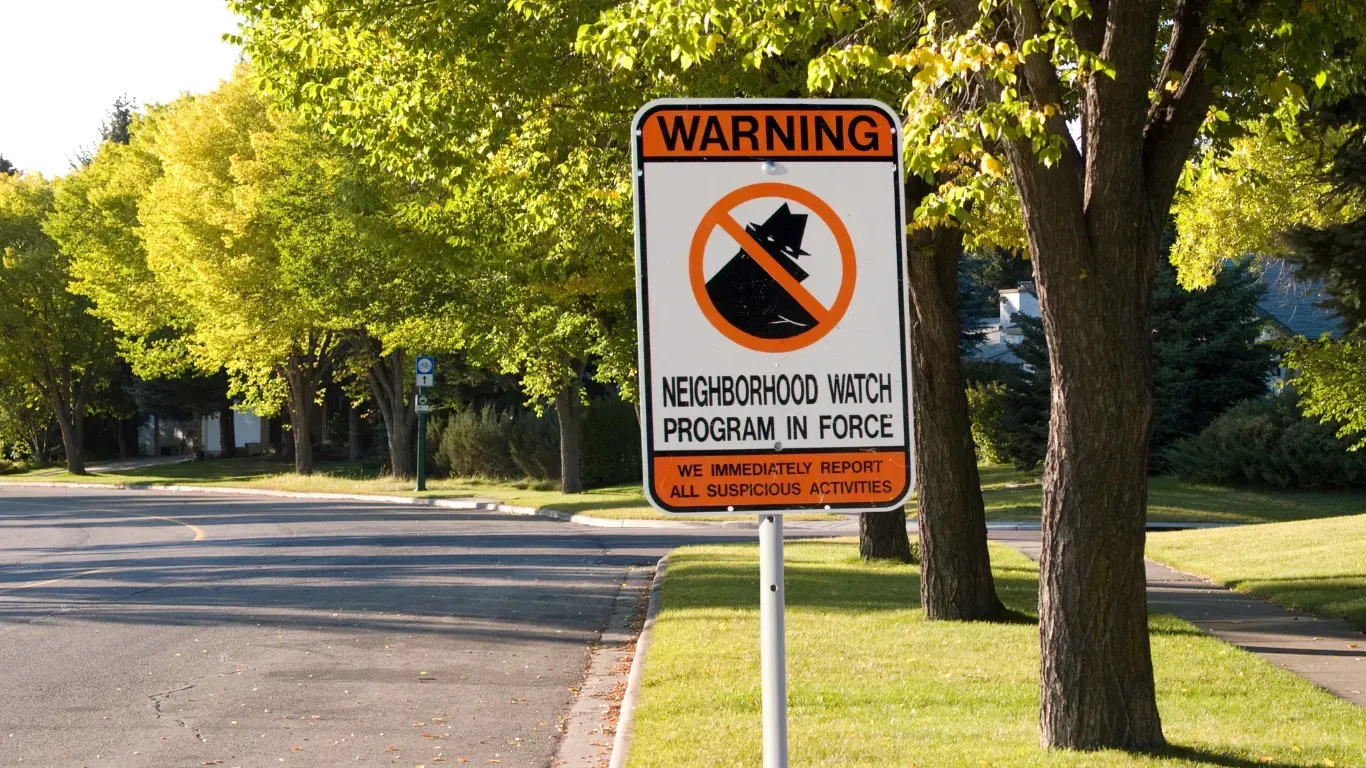
That is the heart of Neighborhood Watch.
Neighborhood Watch isn't about residents becoming police officers, confronting strangers, or putting themselves in danger. In fact, National Neighborhood Watch specifically reminds participants that residents are the extra “eyes and ears” of their community and should report suspicious activity to law enforcement rather than taking action themselves.
It is neighbors communicating with neighbors and communities building relationships with the law enforcement officers who serve them.
And there is something else that statistics don't always capture:
the value of a connected community.
When neighbors know one another, people tend to pay attention. They share information. They check on an elderly neighbor. They notice when something doesn't look right. They learn what is actually happening in their area instead of relying solely on rumors or social media posts.
Most importantly, they know who to call and what information is helpful when something needs to be reported.
That partnership matters.
Citizens' Crime Watch of Miami-Dade County was built around that very idea—residents and law enforcement working together instead of separately. The history of our organization began with residents who were concerned about crime in their own community and learned that there was a better way to respond: organize, become educated, communicate with law enforcement, and work together.
More than 50 years later, I still believe in that approach.
Crime Prevention Has Changed, Too
We also have to remember that crime prevention today looks different than it did years ago.
Yes, we still talk about locking doors, securing vehicles, improving lighting around our homes, and reporting suspicious activity. Those things still matter.
But today we are also teaching families about scams, identity theft, sextortion, human trafficking, online predators, cybercrime, artificial intelligence being used to deceive victims, and criminals who can reach into our homes through a phone or computer without ever stepping into our neighborhood.
That is why education continues to be such an important part of prevention.
A person who recognizes the warning signs of a scam is harder to victimize.
A child who understands that someone online may not be who they claim to be is better prepared to ask for help.
A senior who knows that a government agency or bank will not demand payment through gift cards may stop before sending money to a criminal.
A neighbor who knows what suspicious activity looks like is more likely to report it.
And a community that has an established relationship with law enforcement is better prepared when problems do arise.
Lower Crime Should Encourage Us, Not Make Us Complacent
The FBI itself cautions that national statistics do not necessarily reflect what is happening in every individual community. Crime can vary greatly from one city, county, state, or neighborhood to another. And even with the historic decline, the FBI estimated that more than
1.1 million violent offenses occurred nationwide in 2025.
So yes, we should be encouraged by the numbers.
We should recognize the work being done by law enforcement, community organizations, crime prevention professionals, schools, residents, volunteers, and countless others who contribute to safer communities every day.
But this is not the time to stop paying attention.
This is the time to keep doing what works.
Know your neighbors. Stay involved in your community. Participate in or start a Neighborhood Watch. Attend community meetings. Learn about new crime trends and scams. Teach your children and older family members about safety. Report suspicious activity to law enforcement instead of assuming someone else will do it. And perhaps most importantly, continue building relationships between residents and the law enforcement officers who serve our communities.
Crime prevention doesn't begin after a crime happens.
It begins long before.
It begins with a conversation between neighbors. It begins with a community meeting. It begins when someone learns something new and shares it with someone else. It begins when a resident notices something that doesn't seem right and makes the call.
Those actions may seem small, but together they create stronger, more informed, and more connected communities.
Seeing crime go down is wonderful news.
Keeping it going in that direction is something all of us can be a part of.
Until next time, stay informed, stay safe, and watch out for one another. Because when we know better, we protect better.
Need help or have questions?
📞 Call our office at
305-470-1670
🌐 Visit us online at
Citizens' Crime Watch of Miami-Dade County